
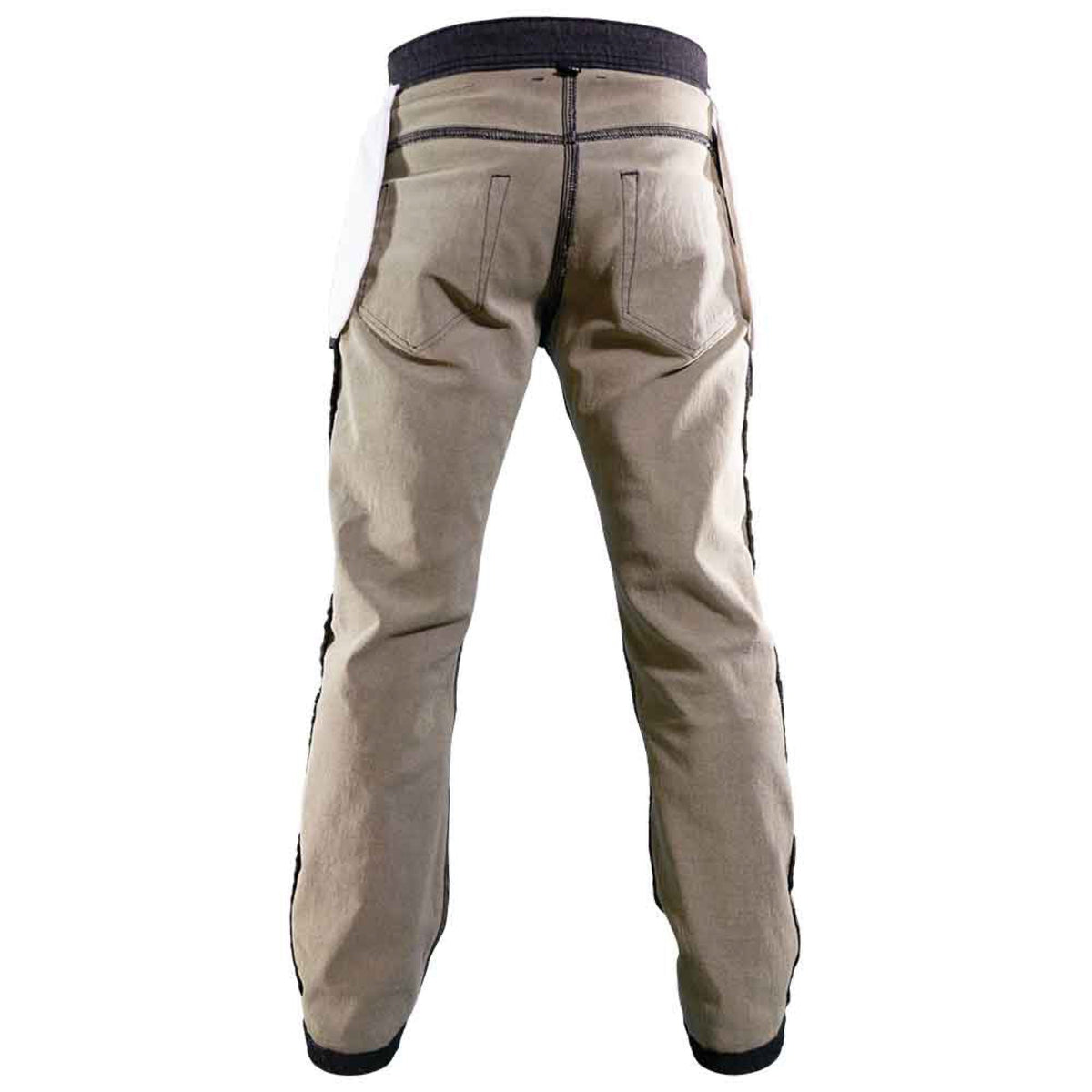
Abrasion resistance is the single most important property of motorcycle clothing — and the one most riders understand least. It's the difference between road rash and walking away from a slide. Here's what it actually means, how it's tested, and why the CE rating matters.
What Abrasion Resistance Means

Abrasion resistance is a fabric's ability to withstand friction against a rough surface without failing. In a motorcycle crash, this means the time a garment survives sliding across tarmac before the fabric tears through and road rash begins.
Standard denim fails in under a second at road speeds. CE AAA-rated motorcycle fabric is independently tested to survive significantly longer — long enough to meaningfully reduce injury severity in a real crash.
How Abrasion Resistance is Tested

CE abrasion resistance for motorcycle clothing is tested to EN 17092 using a standardised method called the Darmstadt test. The test works as follows:
- A sample of the fabric is mounted on a rotating drum
- The drum is pressed against an abrasive surface at a defined force and speed
- The time until the fabric fails (tears through) is measured
- The result determines the CE class: A, AA, or AAA
The test is conducted by an accredited independent laboratory — not by the manufacturer. This is what makes CE certification meaningful: the result is independently verified.
CE A vs AA vs AAA: What the Classes Mean
The three CE classes for motorcycle clothing abrasion resistance represent progressively higher survival times on the test:
- CE A — base level. Meets the minimum standard. Suitable for lower-risk riding environments.
- CE AA — mid level. Better abrasion resistance than CE A.
- CE AAA — highest level. The longest survival time in the test. Recommended for road riding at any speed.
For road riding — commuting, touring, or any riding on public roads — CE AAA is the standard worth targeting. The difference between CE A and CE AAA in a real crash is significant.
What Materials Achieve CE AAA
Achieving CE AAA abrasion resistance requires materials significantly stronger than standard denim:
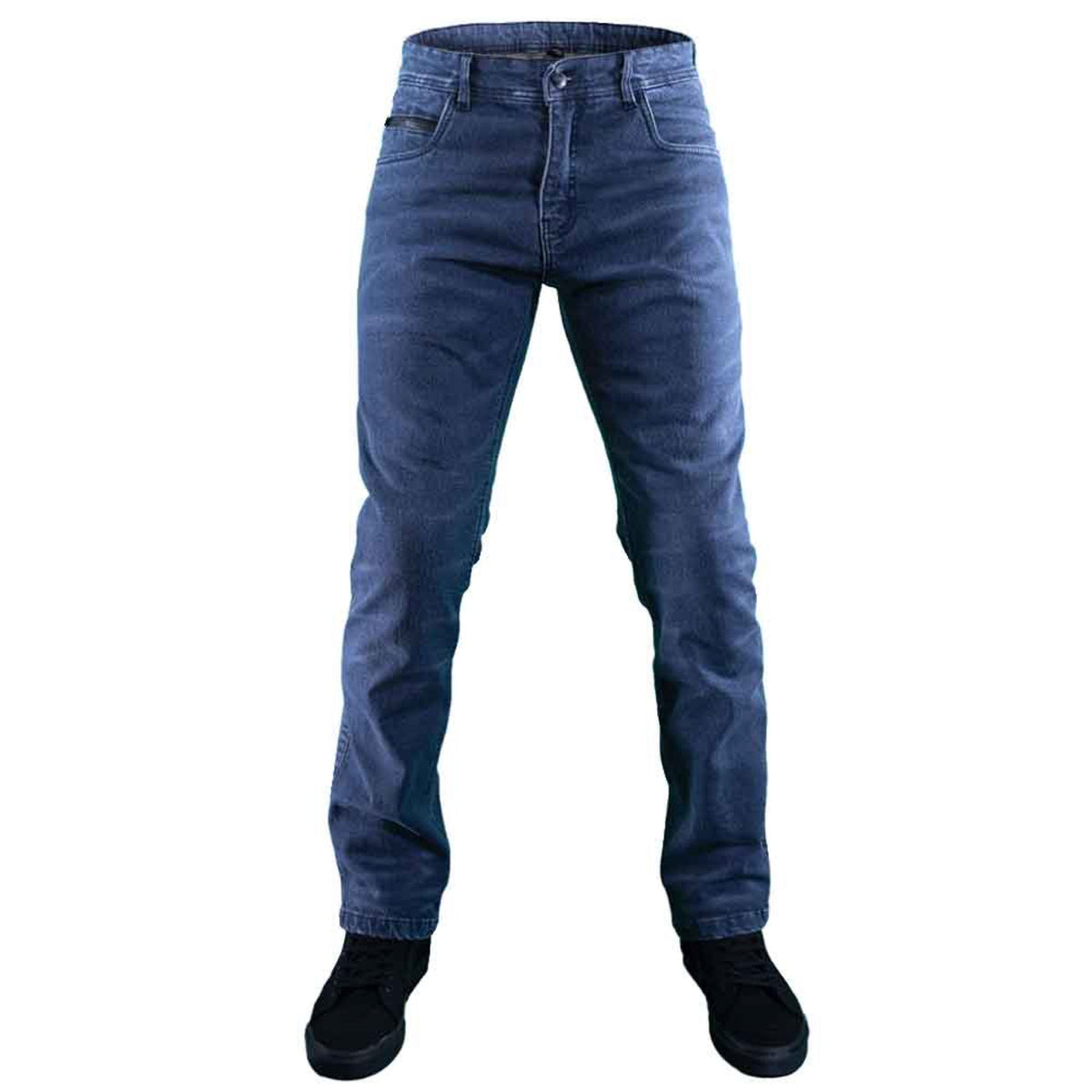
- Kevlar® (aramid) — the most widely used protective fibre in motorcycle gear. DuPont™ Kevlar® is used in the FlexGuard® Hydro Jeans — woven into stretch denim to achieve CE AAA while maintaining the feel of regular jeans.
- Dyneema® (UHMWPE) — ultra-high-molecular-weight polyethylene. Extremely high abrasion resistance, lighter than Kevlar®.
- High-tenacity polyester — used in some mesh constructions. Can achieve CE AAA in the right weave structure.
Abrasion Resistance vs Impact Protection: What's the Difference?
These are two separate properties that CE certification addresses separately:
- Abrasion resistance — how long the fabric survives sliding on tarmac. Tested at the garment level (EN 17092). Rated A, AA, or AAA.
- Impact protection — how much force the armor absorbs in a direct impact. Tested at the armor level (EN 1621-1, EN 1621-2). Rated Level 1 or Level 2.
Both matter. A CE AAA garment with CE Level 2 armor gives you the highest available protection against both abrasion and impact — the two primary injury mechanisms in a motorcycle crash.
The Bottom Line
Abrasion resistance is what keeps road rash from happening in a slide. CE AAA is the highest independently tested standard available. If you're buying motorcycle jeans or a jacket for road riding, CE AAA is the rating to look for — and the FlexGuard® Hydro Jeans and FlexGuard® Air Mesh Jeans are both built to that standard.



Leave a comment
This site is protected by hCaptcha and the hCaptcha Privacy Policy and Terms of Service apply.